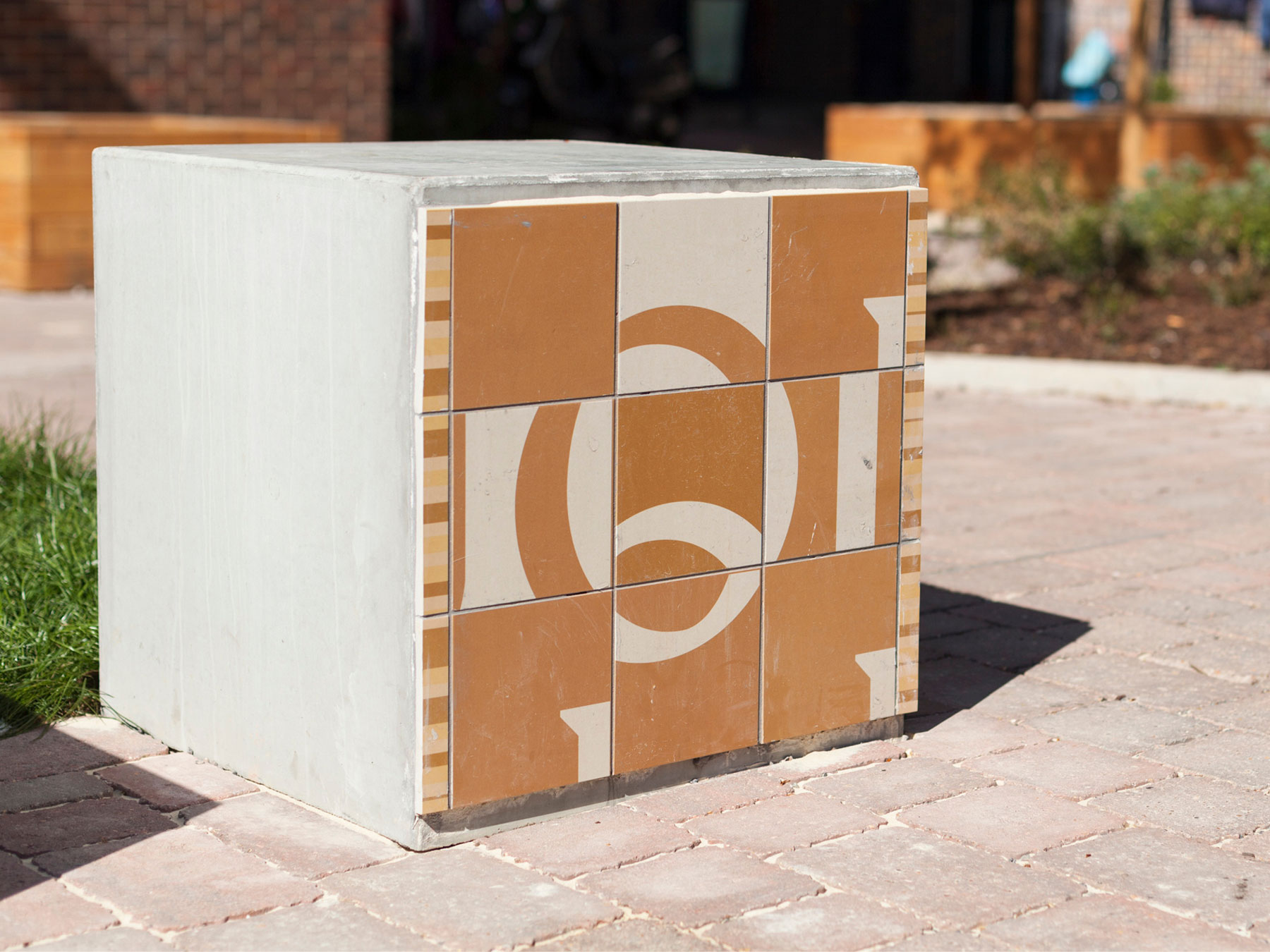
Nestled in Bromley-By-Bow, Hackney, Jolles House is a historic building named after Sir John Jolles — City of London merchant, member of the Worshipful Company of Drapers, Sheriff of London (1605–1606), and Lord Mayor in 1615. Once a quiet landmark, it is now being reimagined through an ambitious redevelopment by Poplar Harca and Pollard Thomas Edwards architects, transforming it into a cultural and residential beacon with 70 new homes for young professionals and families drawn to culture and East London’s famously vibrant community. Ahead of its launch, Marlon Tate was tasked to develop a new place narrative, brand identity, environmental graphics, and launch campaign for the housing project.
Our strategy was inspired by the City of London itself, where past, present, and future coexist in extraordinary ways. Drawing on heritage, local vernacular, British typography, and the specificity of place, the brand identity, wayfinding, and marketing campaign reflect London’s layered history. The resulting brand identity and visual language, constructed entirely by screenprinted tiles, references the disrupted aesthetic of old and new layers of torn posters — an approach that mirrors the city’s rhythm and, perhaps, illustrates exactly how the future gets in.
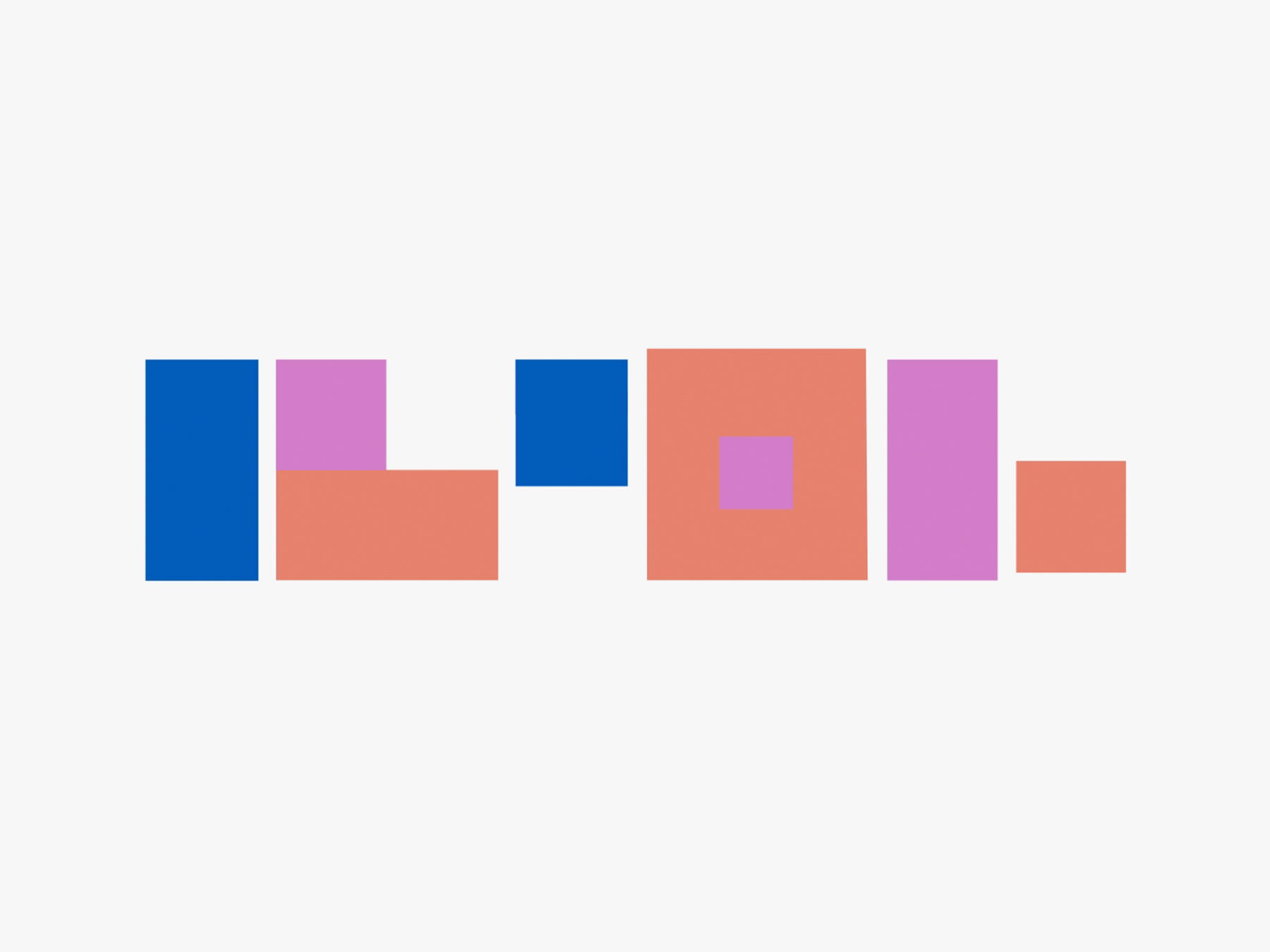
Ilior is Greece’s first major co-living scheme. Formed in 2018 by Daniel Lyssy, it aims to create exceptional spaces for young and creative professionals who work from home. Ilior One —launched in the centre of Athens— is the first of the brand’s instalments. Indeed, Ilior is in the process of building an ambitious network of plug-and-play spaces and buildings across the nation, that will radically transform the way Greeks live.
We were given creative freedom to brand this unique scheme. Similarly to other Mediterranean South European capitals, Athens is not very familiar with the concept of co-living. With this in mind, we decided to change the subject completely and position Ilior as an imaginary country.
Inspired by the notion that ‘our house is our castle’, we developed an overarching modular and flexible identity system that draws upon the idea of a ‘special place’. For this purpose, a responsive brandmark that references the concept of a flag becomes central to the identity. A flag of an imaginary country where people can dream freely; work collaboratively; debate fruitfully and develop. By drawing upon the flexible architecture of Ilior spaces, the brandmark expands and contracts across different formats, as required. To further illustrate its uniqueness, the colour palette embraces bright pop colours, that no country in the world would ever use for its national flag. This country is entirely imaginary. In fact, that is its strength. Welcome to the land of the dreamers.
Located at the gateway to the Athenian Riviera, in the heart of Europe’s largest passenger port, Piraeus Tower was originally built in 1972. It was designed to become a landmark in a rapidly evolving area that was transforming into an international hub for shipping and transportation. However, the project was abandoned in 1982, and the Tower remained empty for nearly 50 years.
In 2020, real estate company Dimand, in collaboration with the European Bank for Reconstruction and Development (EBRD) and Prodea Investments, secured a 99-year concession from the Municipality of Piraeus with a vision to restore the Tower to its intended status as a landmark.
The Joint Venture appointed Marlon Tate as the creative agency to lead the creative direction and brand strategy for Piraeus Tower. Marlon Tate designed and art directed the official website, successfully attracting the attention of investors, political stakeholders, and the local community. In addition, we wrote all website content and developed a fully responsive, modern digital experience, including custom maps and interactive infographics that reflected the visual language created specifically for this landmark project.

Once an industrial hub and the home to the biggest Kodak Factory outside the US (55 acres) for 125 years, this exciting new area in Harrow is London’s most exciting regeneration story. Named after George Eastman, the co-founder of Kodak in 1888, Eastman Village will be a vibrant new destination that will provide 2,000 homes, in addition to planned restaurants, cafés, shops and offices set around a landscaped park creating a new leisure, business and residential destination. The area will benefit from a new school, 3,000 new jobs and fast transport links to central London.
As part of the £1.75bn regeneration programme, Marlon Tate was invited to clarify, define and express the vision of this new area by creating a brand narrative, identity, and launch campaign. Our strategy was informed by the fact that during its peak, the Factory housed 6,000 workers who produced the famous Kodak film strips. Once the place that enabled us to capture our memories, now the place that will enable us to create our own. The new brand is anchored around a custom brandmark which references the original alignment guides on Kodak’s 35mm filmstrips. Central to the launch campaign was our slogan ‘making memories in Eastman Village’. We also designed the external wayfinding programme and we are anticipating its planning approval.

Marlon Tate art directed the record cover and marketing campaign for indi pop star Leon of Athens’ third studio album (EMI). The album, titled’ Xenos’ (greek for ‘foreigner’), features 11 songs echoing the feeling of being a foreigner, a stranger to a new country as well as to yourself. This eclectic spirit was important to convey visually in the artwork, as well as portraying a strong sense of the artist’s personality. The fragmented nature of the market makes it essential that the concept engages across a wide range of formats – print to digital – to create an integrated release and a holistic visual universe.
Our creative concept was inspired Skype and long-distance relationships referencing the need for communication with our external as well as our internal worlds. The album packaging consisted of a sleeve with a die-cut set of multiple Skype windows through which one can see the inner cover of the cd-case with the artist’s face. The campaign included a city-wide out of home roll-out and a website in order to set the conceptual and visual tone, teasing each single through a Skype window.

Marlon Tate designed and art directed the cyberpunk experimental five-track ‘Baby Blues’ EP by Athens-based producer Konstantinos Gkoumas.
Through a blend of buzzing oscillations, blue-collar rhythms, and backwoods synth progressions, the artist’s original intention was to create a Blues record. Instead, he managed to create an EP that redefines the aesthetics of the experimental genre with an amalgam of puzzling downtempo and dark ambient transforming reckless cowboys into knights in shining armour. To dramatise the album’s unapologetic creative recklessness, we created a visual language that’s meant to look like we made it in paint.
To promote the release we expanded our tongue-in-cheek art direction into a series of posters and billboards featuring our MS paint-written scrawl.

In 2013, Nikos Georgopoulos—Marlon Tate’s Creative Director and design press favourite often called a “pop star art director”—dropped Mataroa, an electro-pop album-musical with a story as big as its sound. The project takes its name from the New Zealand ship that, in 1945, carried 200 young Greek intellectuals from Athens to Paris, escaping the looming Greek Civil War. Mataroa dives into the theme of salvation, connecting the moment of disembarkation to the redemptive state one can reach through an inner journey of self-discovery. Independently produced, the album went viral, grabbing attention for its emotional lyrics and infectious mix of pop, indie, and electronic sounds—a perfect example of bold creative direction for music. To amplify the release, Nikos co-directed a 2-minute short film with film director Manolis Mavris. Shot in London, the surreal piece fuses Greek and French voiceovers and references ferry safety videos, flipping everyday gestures into cinematic poetry. This short film became a key piece of the album release marketing, showing how music, visuals, and storytelling can collide in fresh, unexpected ways.

Dress For Our Time, by artist and designer Helen Storey, is a public art installation project that uses the power of fashion, science and wonder to communicate some of the world’s most complex issues of our time.
The dress itself is made from a tent (which is no longer in useable condition), gifted to the project by the United Nations High Commissioner for Refugees (UNHCR). In giving the tent a second life, it gives this public art installation an unbreakable bond to humanity and represents the importance of nurturing and protecting all people and safeguarding generations to come. As the gateway to Paris – the city hosting the United Nations Climate Change conference COP 21 – many of the delegates that passed through the station came face to face with the world’s first digital couture dress dedicated to exploring climate change and its human impact.
‘By interpreting the station’s setting as a conceptual border between Britain and France, Nikos Georgopoulos created a polyglot responsive identity that reads the name of the project in English, French and Chinese referencing boarder crossing signs.’
–Art Directors’ Club Journal

As part of our visual identity and advertising for the MA Show at London College of Fashion, we art directed the exhibition of the MA Fashion Photography. The art images of the students are printed on a spread on a newsprint.
Our collaboration with London College of Fashion continued when the Institution commissioned us to develop a visual identity and advertising campaign for the exhibition LCFMA16, which featured work by the graduating students around fashion and surrounding disciplines. Revisiting the legacy of education as an interactive and dynamic process while also reflecting the influence of technology, our exhibition catalogue for MA Fashion Photography is designed in a way that featured students’ work is intertwined with each other, thus creating a never ending series of new compositions and all possible futures.
